

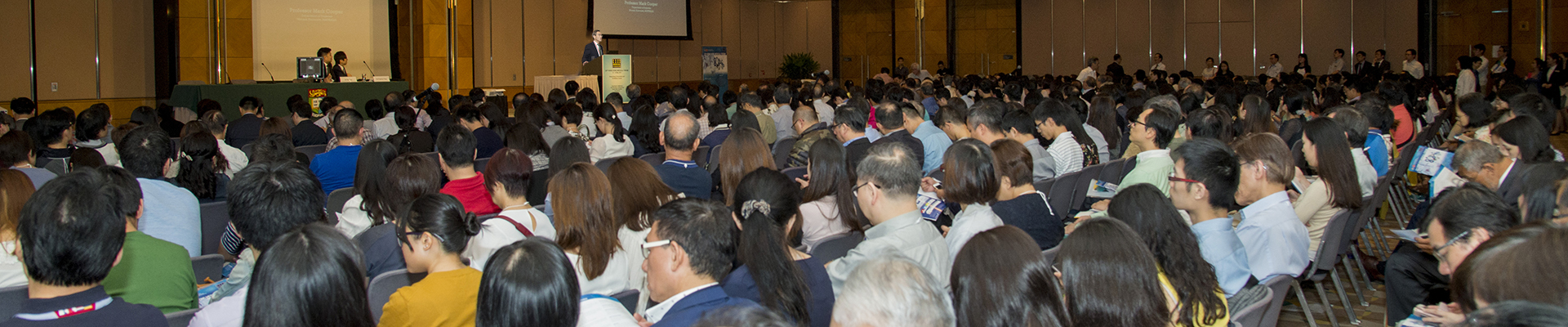
AJS McFadzean Distinguished Lecture
Professor AJS McFadzean (1914 – 1974), a distinguished physician from Glasgow who became the city’s first post-war and longest serving Professor of Medicine (1948 – 1974), had shaped the way medicine was taught and practiced locally. With his clinical acumen, Professor McFadzean offered countless patients hopes of recovery from their suffering, and inspired generations of astute physicians to continue his legacy in putting Hong Kong medicine on the international map of excellence. His insistence in understanding the scientific basis of health and disease laid the foundation of medical education and research in Hong Kong. To commemorate the achievements and contributions to medicine of Professor McFadzean, the AJS McFadzean Visiting Professorship has been established in the Department of Medicine, School of Clinical Medicine, The University of Hong Kong.
Event Information

| Topic: | Cardiomyopathies: A Paradigm for the Future of Cardiovascular Therapeutics? |
| Date: | January 23, 2026 (Friday) |
| Time: | 18:15 – 19:00 |
| Venue: | Room 403, 4/F, Professorial Block, Queen Mary Hospital |
| Registration: | Closed |
| Organiser: | Department of Medicine, School of Clinical Medicine, The University of Hong Kong |
| Language: | The official language is English. There will be no simultaneous translation. |
| Accreditation: |
| College / Programme | CME Point |
Category |
|---|---|---|
| Hong Kong College of Community Medicine | 0.5 | PP-PP |
| The Hong Kong College of Family Physicians | 1.0 | OEA-5.02 |
| The Hong Kong College of Pathologists | 1.0 | CME-PP |
| Hong Kong College of Physicians | 0.5 | PP-PP |
| Hong Kong College of Radiologists | 0.5 | B-PP |
| The College of Surgeons of Hong Kong |
1.0 | CME-PP |
| MCHK CME Programme (HKMA, HKDU, HKAM, DH) |
1.0 | -- |
Speaker
Professor Perry Elliott, MD, MRCP, FRCP
Professor of Cardiovascular Medicine & Director, Institute of Cardiovascular Science,
University College London, United Kingdom
Professor Perry Elliott (H-index 139) is Professor of Cardiovascular Medicine at University College London (UCL). He is Director of the Institute of Cardiovascular Science at UCL and a Consultant Cardiologist at St. Bartholomew's Hospital London. He is past chair of the European Society of Cardiology (ESC) Heart Academy, the ESC Council on Cardiovascular Genomics, the ESC Working Group on Myocardial and Pericardial Diseases, and the Executive Committee for the European Outcomes Research Programme registry on cardiomyopathies. He is an Executive Editor for the European Heart Journal.
Professor Elliott is a recognised world authority in heart muscle disease. His most important research contributions include: gene identification, development and application of risk tools, biomarker discovery, and clinical trials in rare diseases. The direct benefits to patients include accurate risk prediction, effective family screening, and prevention of sudden cardiac death. His work is intrinsically collaborative and he has coordinated numerous global consortia that have informed disease classifications, US and European Practice guidelines, and genetic testing, including detailed rare cardiovascular disease data models for the 100K-genome project.
Abstract
Healthcare is moving rapidly towards models based on personalised or stratified medicine in which emergent diagnostic technologies, molecular biology, big data and real time monitoring are used to better target therapies and improve health, social outcomes and cost efficiency. New scientific disciplines such as genomics, transcriptomics, proteomics and metabolomics are essential building blocks of personalised medicine as they provide data that can be used to separate patients into specific groups amenable to tailored therapy at an earlier stage than is currently possible. However, the potential of these disciplines to transform human health can only be realised by integrating biological data into disease models that reflect the complex phenotypes seen in clinical practice.
Over the past seventy years, our understanding of the pathogenesis of cardiomyopathies has been transformed and it is clear that the small number of canonical clinical phenotypes (hypertrophic, dilated etc.) encompass a much broader spectrum of disease which is determined by rare and common genetic variation, environmental triggers, ageing and comorbidity.
For decades, the management of individual cardiomyopathy subtypes has focused primarily on the management of symptoms and the prevention of disease-related complications, such as heart failure and sudden cardiac death. Treatment of progressive myocardial dysfunction has relied on conventional evidence-based heart failure therapies with variable impact.
Cardiomyopathies offer an ideal model for innovation because, in many individuals, they have a monogenic cause, the expression of which is modified by complex genetic mechanisms, comorbidities and lifestyle. Elucidation of the complex cellular and molecular pathways that result in downstream tissue phenotypes has led to the investigation of new or repurposed pharmacological agents and therapies that modify or mitigate the effects of causative genetic variants. In this lecture, Professor Elliott will describe some of the most promising therapeutic approaches in cardiomyopathy and discuss their potential benefits for patients and relatives.
Enquiry
Department of Medicine, School of Clinical Medicine
Room 405, Professorial Block
Queen Mary Hospital
Pokfulam, Hong Kong
Tel: (+852) 2255-6222
Fax: (+852) 2855-1143
Email: medconf@hku.hk
Past Events
| AJS McFadzean Distinguished Lecture | Materials |
|---|---|
| Professor Perry Elliott (January 23, 2026) | Poster, Presentation, Video, Photos |
| Professor Huang Xiaojun (November 30, 2024) | Poster, Presentation, Video, Photos |
| Professor James Rowe (November 11, 2023) | Poster, Presentation, Video, Photos |
| Professor Massimo Pinzani (January 12, 2023) | Poster, Program, Presentation, Video, Photos |
| Professor Sir Mark Pepys (November 23, 2018) | Poster, Program, Presentation, Video, Photos |
| Professor Peter M Rothwell (November 19, 2017) | Poster, Program, Presentation, Video, Photos |
| Professor Sir Peter J Ratcliffe (November 7, 2016) | Poster, Program, Presentation, Video, Photos |
| Professor Iain McInnes (February 15, 2016) | Poster, Program, Presentation, Video, Photos |



